
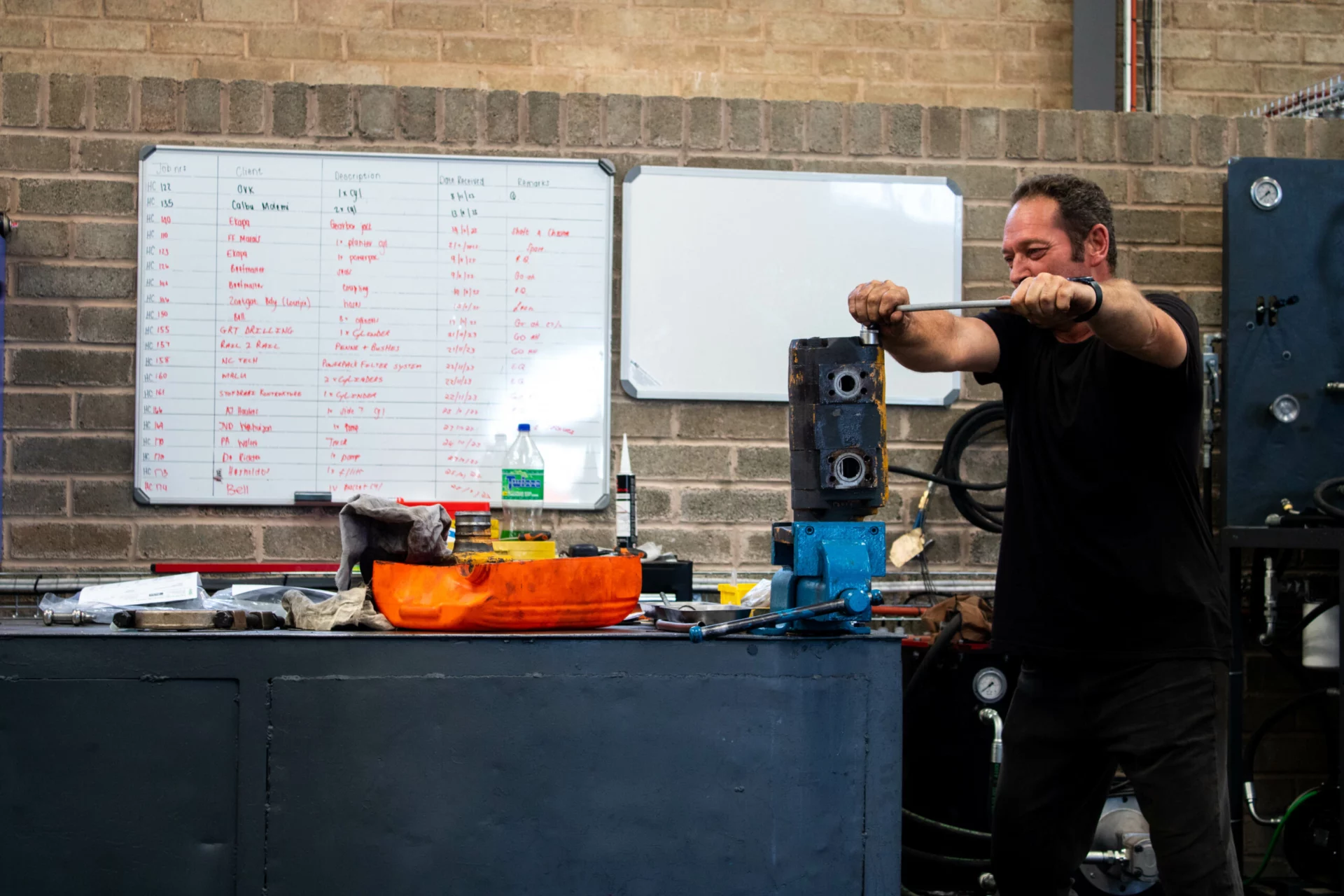
Many people refer to anyone who works on hydraulic systems as a “mechanic,” but hydraulics is a specialized field. The correct term for a hydraulic mechanic is a Hydraulic Technician or Hydraulic Fitter. These professionals work specifically with high-pressure systems, hydraulic cylinders, pumps, valves, hoses, and fluid power components.
Understanding the difference helps clients choose the right service provider and avoid costly mistakes.
What a Hydraulic Technician Actually Does
A Hydraulic Technician is trained to diagnose, repair, rebuild, and test hydraulic systems. Their work includes:
• Inspecting cylinders, pumps, motors, and valves
• Detecting leaks and pressure loss
• Replacing and fitting seals
• Diagnosing internal bypassing
• Repairing damaged rods and barrels
• Testing pressure and flow
• Ensuring the system runs safely and efficiently
Hydraulics require precision, not guesswork. That is why this role exists as a dedicated profession.
How a Hydraulic Technician Differs from a General Mechanic
A general mechanic works mainly with engines, brakes, clutches, and drivetrain components.
A hydraulic technician focuses on fluid power systems.
Key differences:
| General Mechanic | Hydraulic Technician |
|---|---|
| Works on mechanical parts | Works on pressure systems |
| Diagnoses by sound and movement | Diagnoses with flow and pressure testing |
| Replaces worn parts | Rebuilds components to strict tolerances |
| Uses standard tools | Uses specialised hydraulic testing tools |
| Limited hydraulic experience | Daily hydraulic repair work |
This is why hydraulic problems often recur when taken to a general workshop.
Why the Title Matters for Your Equipment’s Reliability
Hydraulic systems operate under extreme pressure. Even a small assembly mistake can lead to:
• Leaks
• Cylinder drift
• Pump failure
• Overheating
• Contamination
• Unsafe working conditions
A qualified Hydraulic Technician knows how to prevent these problems with correct repair methods, proper testing, and clean assembly procedures.
The title matters because the skills matter.
Other Names You May Hear in the Industry
Depending on the region or type of work, hydraulic professionals may also be called:
• Hydraulic Fitter
• Hydraulic Service Technician
• Fluid Power Technician
• Hydraulic Repair Specialist
• Cylinder Rebuild Technician
All focus on hydraulic systems, but the skill levels and responsibilities vary between workplaces.
How Choosing the Right Technician Saves You Time and Money
Hydraulic systems fail faster when serviced by someone who isn’t trained in fluid power.
Common results include:
• Repeat leaks
• Incorrect seals installed
• Poor testing
• Damage from contamination
• Misdiagnosed faults
• Expensive follow-up repairs
A trained Hydraulic Technician prevents these issues through proper inspection and professional repair standards.
How Helcon Brings Specialist Skill to Every Repair
When clients bring their equipment to Helcon, they work with technicians who handle hydraulic systems daily. This level of focus brings direct benefits:
• Accurate fault-finding
• Correct seal installation
• Precision machining for rods and barrels
• Professional testing after every repair
• Clean assembly to prevent contamination
• Honest feedback on repair vs replacement
Clients reduce downtime, avoid unnecessary part replacements, and get repairs that last.
Final Thoughts
A hydraulic mechanic is more than a mechanic.
They are a trained Hydraulic Technician with the skills to keep high-pressure systems safe, reliable, and efficient.
Choosing a company with the right technicians protects your equipment and your business. That is what Helcon delivers on every repair.